
Toll-Free Contact: 877-333-1456 | Toll-Free Admissions: 647-716-1293

Toll-Free: 877-333-1456
The Cost of the Trade War, By the Numbers
The most current estimate, from economist Trevor Tombe (University of Calgary) and reported across multiple outlets in the last week of August 2026, puts roughly 87,000 Canadian jobs at risk from the new tariffs, with Ontario facing the steepest losses. Earlier in the month, Tombe’s provincial breakdown estimated Ontario at roughly 36,000 jobs at risk (tied to auto and manufacturing exports), British Columbia at 11,000 (forestry among the hardest-hit sectors), and Alberta at 9,000 (smaller and more indirect, felt through supply chains feeding the energy sector). These figures have been refined as the situation developed through August: the exact number moves, but the shape of the impact hasn’t. Ontario carries the heaviest direct exposure, B.C. and Alberta less so.
Canada announced retaliatory countermeasures effective September 8, 2026: counter-tariffs of 15, 25, and 50 percent on products drawn from the sectors the U.S. targeted. For workers directly affected by tariff-related layoffs, legal advocates have been reminding Canadians of their existing rights to severance and protections around temporary layoffs, a reminder that the human cost of this dispute is showing up in real workplaces right now, not just in economic projections.
Canada’s Response: Building at Home
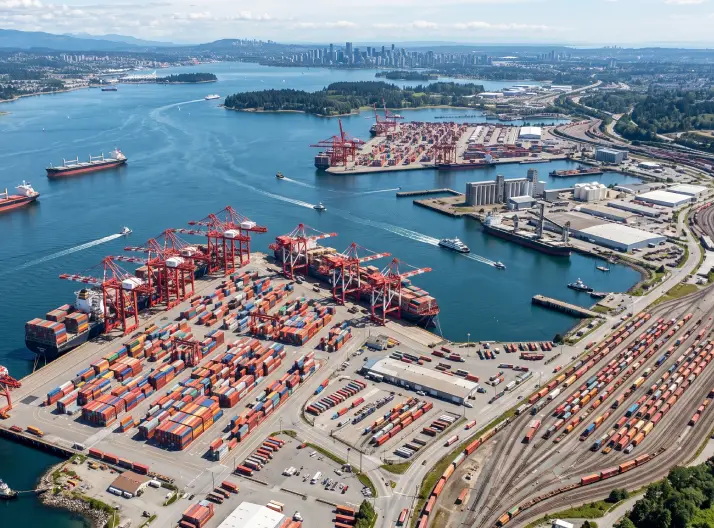
Rather than only playing defence, Canada’s federal government has moved to reduce its long-term reliance on U.S. trade. In August 2026, the Major Projects Office announced $116 billion across 18 nation-building projects: ports, mines, LNG facilities, energy infrastructure, and critical minerals processing, building on an initial $60 billion tranche announced in November 2025 covering nuclear power and LNG.
On steel specifically, the government launched the Commodities Sectoral Support Program on August 10, 2026, rebating 50% of eligible rail and marine transportation costs for steel and critical minerals producers affected by the tariffs.
How Individual Businesses Are Being Supported
The response isn’t only large-scale infrastructure. The federal government has also rolled out direct, regional business support: for example, a FedDev Ontario investment of over $12.5 million to help nine Hamilton-area businesses respond to tariff-related pressures, announced in late August 2026. It’s a smaller number next to $116 billion, but it signals the same underlying strategy: keep Canadian manufacturing capacity intact and growing, rather than letting it shrink under tariff pressure.
Taken together, the mega-projects and the regional business support programs are two ends of the same policy: large enough investment to build new domestic capacity, and enough targeted relief to keep existing manufacturers (the ones already employing welders) from cutting staff while that longer-term capacity comes online.
Where This Could Go Next
Some of what’s ahead is still unsettled. The U.S. has floated raising tariffs on autos, auto parts, and steel further (to 50% as early as January 2027), a move that would deepen Ontario’s exposure specifically. Some analysts have also raised the possibility of a Canadian recession if trade tensions escalate further or if CUSMA/USMCA renegotiation breaks down. None of this is guaranteed, and forecasts in an active trade dispute change often.
That uncertainty is part of why Canada’s nation-building investment strategy reads as more than a one-time announcement: it’s a hedge against a trade relationship that’s proven less predictable than it used to be, and a reason the demand for domestic building capacity is likely to outlast this specific round of tariffs.
Why This Creates Welding Demand, Not Less of It
Every port, mine, pipeline, and plant on that $116 billion list needs to be physically built. That requires welders, fitters, and fabricators, not fewer of them. The federal government’s own target reflects this: up to 100,000 new skilled trades workers by 2030–31 (Team Canada Strong initiative), against a broader national need of 1.4 million new tradespeople by 2033. The trade war is shrinking export-dependent assembly work in specific sectors. At the same time, it’s driving new investment in exactly the kind of large-scale domestic building that depends on skilled trades.
What This Means for Hiring, Not Just Investment
Announced funding doesn’t turn into finished infrastructure without a workforce behind it, and that’s where the pressure ultimately lands: on the supply of qualified tradespeople available when these projects move from announcement to construction. A $116 billion project list and a national shortfall of skilled workers are, in effect, the same story told from two different angles, which is exactly why the federal government paired its infrastructure announcements with a specific skilled trades hiring target rather than treating them as separate issues.
What This Looks Like in Surrey, Edmonton & Brampton
For students in our three regions, the story plays out differently depending on where you are. In Brampton (Ontario), the exposure is real (Ontario faces the steepest job losses, concentrated in auto and manufacturing), but it’s also home to major nation-building investment activity. In Surrey (B.C.), forestry bears more of the tariff impact, while the province’s port and infrastructure investment continues to drive fabrication and welding demand. In Edmonton (Alberta), the exposure is smaller and more indirect, filtered through the energy sector’s supply chains, a sector that continues to need certified welders regardless of trade policy. For more on Alberta’s specific industrial landscape, see our related piece below.